

As we move into Women’s History Month, following a month of reflecting on Black history and legacy, I’ve found myself thinking deeply about the women who came before me.
In February, I travelled to Brazil, where I visited Salvador, Bahia; a city with one of the largest African diasporic influences outside of the African continent, where history, culture, and ancestry live in the streets.
During one of my tours through Salvador, I found myself standing in front of the medical school where the first Black woman in Brazil, Maria Odília Teixeira, studied medicine and graduated in 1909. She went on to become the first Black female professor at the Faculty of Medicine of Bahia just five years later, teaching obstetrics, a woman undeniably ahead of her time.
Becoming a doctor has never felt like an individual achievement. It is layered, inherited, and communal.
As a Black woman in medicine, discovering this part of history made me pause. I wondered how much the women and ancestors before me had to endure so that I could stand where I stand today, not only as a visitor, but as someone walking a path in medicine they once had to fight to enter.
Not long after, I found myself sitting in a Black ancestral healing circle, listening to older Black women share stories about infertility, pregnancy, postpartum, and the realities of navigating healthcare systems that continue to neglect them. Their words carried pain, strength, and wisdom.
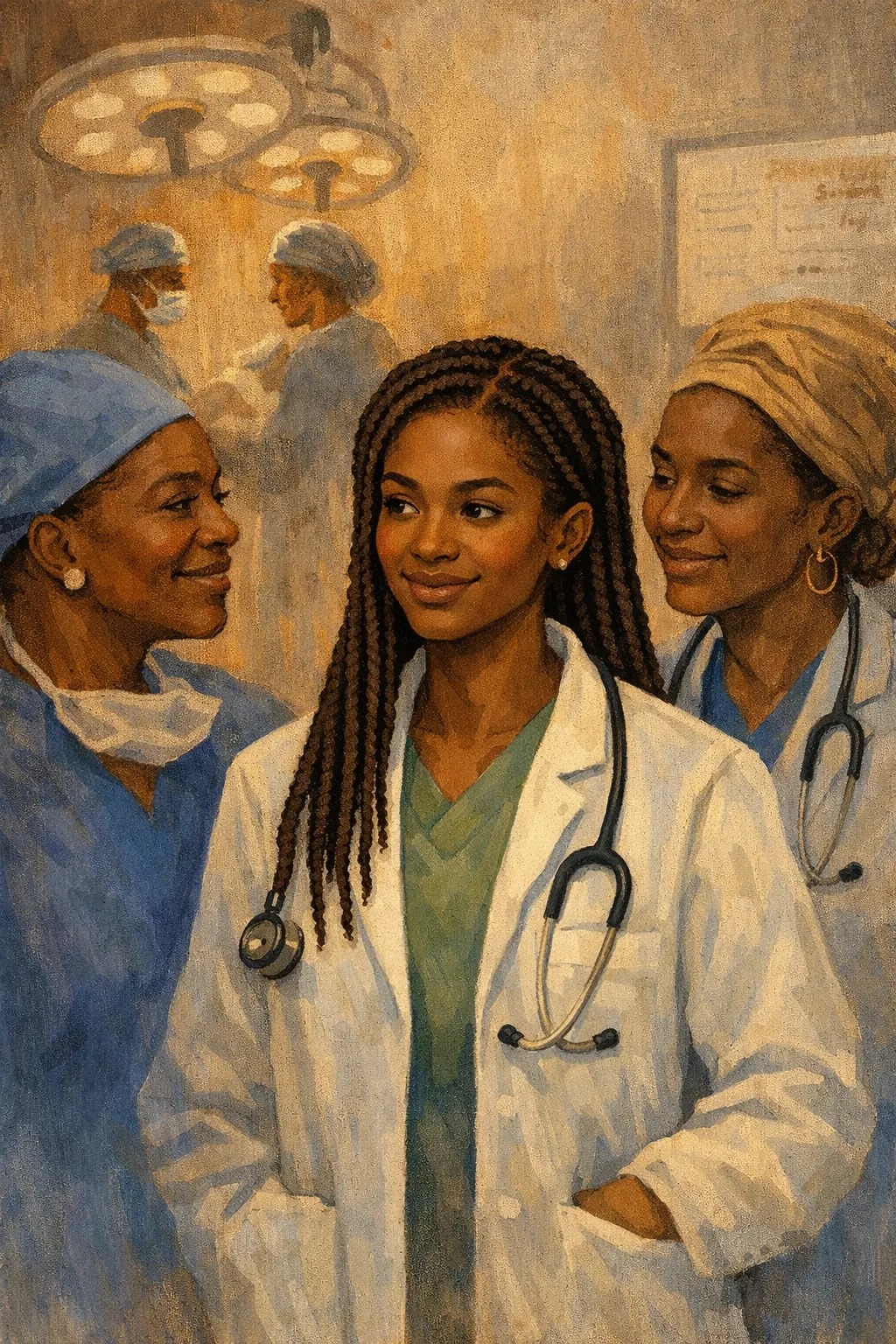
These moments made me realize how much of who I am comes from the women around me. Becoming a doctor has never felt like an individual achievement. It is layered, inherited, and communal. It carries the hopes, sacrifices, and prayers of the women who raised me, prayed for me, shared their stories with me, and believed in possibilities they themselves may not have had the chance to pursue.